Design Focus | By Durell Editorial | Oct 21, 2026 | 5 min read
A brief summary... Learn how to clean and maintain SPC flooring with simple daily habits, safe cleaners and smart protection tips. Keep your floors looking new for years.
DURELL · Flooring Care Guide
How to Maintain SPC Flooring: A Practical Guide to Keeping Your Floors Looking NewSimple daily habits, gentle cleaning and a little prevention can help your SPC flooring stay fresh, clean and ready for everyday life.
In This Article
Understanding SPC Flooring Daily and Weekly Care Handling Spills and Stains Preventing Damage What to Avoid Maintenance Calendar Commercial Spaces Installation and Maintenance Quick Troubleshooting Final Thoughts Frequently Asked QuestionsOne of the main reasons people choose SPC flooring is its durability and easy maintenance. That promise is mostly true. The stone polymer core resists water, dents and termites, and the wear layer shrugs off the scuffs of everyday life. But "low-maintenance" doesn't mean "no maintenance." A few small habits decide whether your floor still looks fresh after ten years or turns dull and scratched after three. The good news is that none of those habits takes much time.
SPC (Stone Polymer Composite) flooring is built in layers. A rigid, mineral-rich core sits at the base. A printed design layer sits above it, and a clear wear layer on top takes all the punishment. That wear layer is what you're really caring for. Everything in your cleaning routine should protect it. Brands like Durell make this easier by pairing a 100% waterproof core with a scratch-resistant wear layer of 0.5mm or more. That gives you a strong head start, but the finish still lasts longer when you treat it kindly.
Dust and tiny stones are the biggest enemy of any hard floor. Every time someone walks across, those particles grind against the surface. A soft-bristle broom, a microfiber dust mop or a vacuum with the hard-floor setting (beater bar off) clears them out. In busy homes, a quick daily pass is plenty.
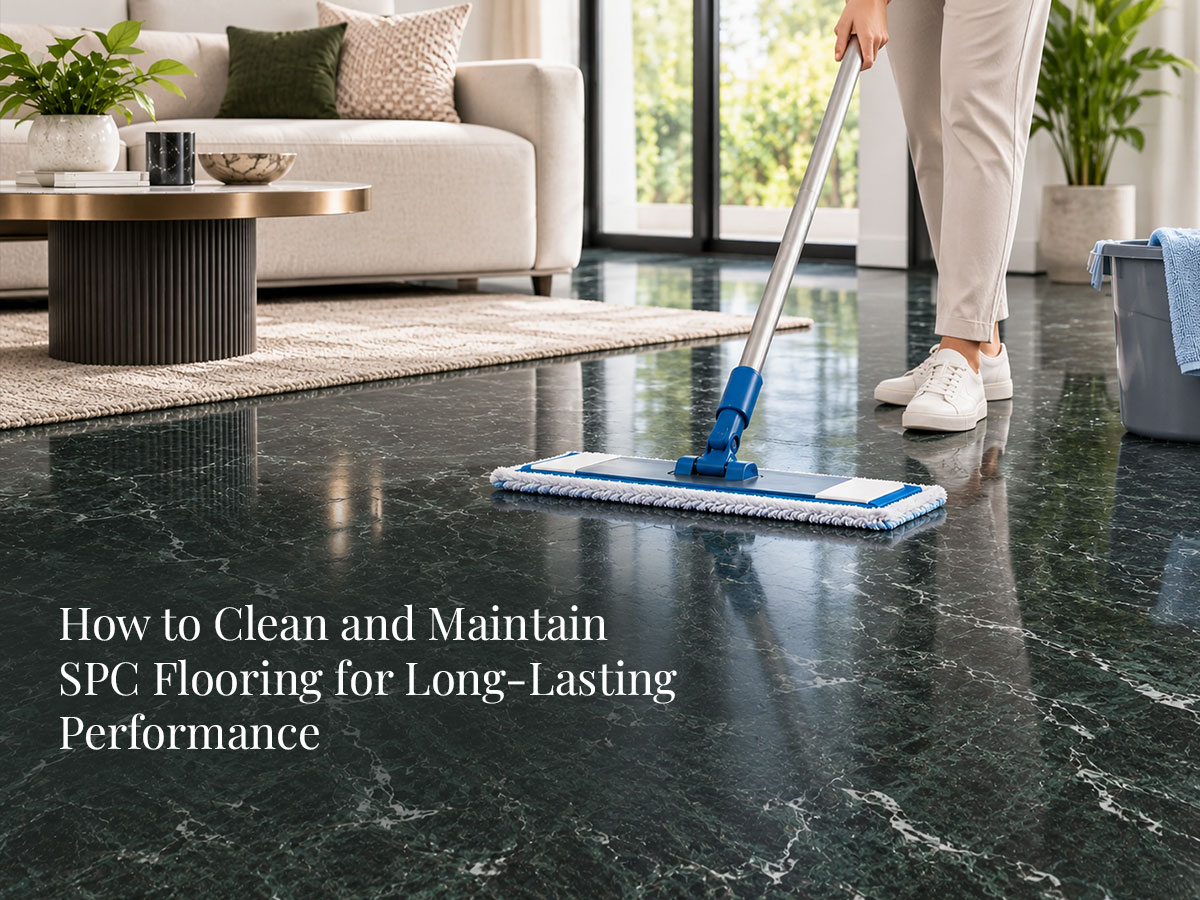
Mop weekly, and keep it light.Use a damp microfiber mop rather than a soaking-wet one. While SPC flooring offers better resistance to moisture than many traditional wooden flooring options, pooling water can still seep into the interlocking joints over time and accumulate beneath rugs or furniture. Wring the mop well and let the floor air-dry or wipe it with a dry cloth if you're in a hurry.
Choose a gentle cleaner.A pH-neutral floor cleaner is the safest option, and plain water with a few drops of mild dish soap works in a pinch. Skip anything abrasive, acidic or ammonia-based, since these can dull the finish over time. Vinegar is popular online, but regular use is better avoided on any coated surface.
The waterproof core gives you time, but that doesn't mean you should leave a spill overnight. Wipe liquids up soon after they land, especially coloured ones like wine, tea, turmeric-heavy curries or hair dye.
For stubborn marks, try this order:
Never scrape with a metal blade or scouring pad. That swaps a stain problem for a scratch problem, and scratches are harder to undo.
The best maintenance is the kind you never have to do. A little prevention goes a long way:
Some habits quietly shorten a floor's life:
If you want a glossier look, remember that SPC is designed to look good on its own. Polishes tend to create more work than they save.
Shops, clinics, offices and showrooms see far more footfall than a home. In these spaces, increase sweeping frequency, use entrance matting generously and schedule a deeper clean at the end of each day. An auto-scrubber with soft pads works well for larger areas, as long as it's set for hard-surface flooring. This is also where a product's wear layer and fire-safety credentials matter. Durell's SPC range is built with commercial use in mind, so it holds up to heavy traffic as long as cleaning stays consistent.
Yes, more than most people expect. Floors that sit on a flat, clean, dry subfloor with correctly sized expansion gaps stay stable and are easier to keep clean. Uneven bases lead to flexing, which can stress joints and trap moisture. Inter-lock floating systems, like the one Durell uses, are simple to install, but they still depend on a well-prepared base. If you notice planks lifting, gaps opening or a hollow sound underfoot, address it early rather than waiting for it to spread.
Dull patches: Usually cleaner residue. Rinse with plain water and dry thoroughly.
Fine surface scratches: Often cosmetic, so keep the area clean and avoid further abrasion.
Yellowing near doors: Frequently caused by rubber mat backing. Swap the mat and clean the area.
Water at the seams: Dry it immediately and check that edges are sealed correctly.
Looking after SPC flooring isn't about elaborate routines. It comes down to removing grit, using gentle products, preventing scratches and acting quickly on spills. Do that consistently and the floor will repay you with years of reliable performance. If you're planning a new space and want a floor that's built to cope with real life, explore Durell's SPC flooring collection at durell.in. With great finishes across stone and other looks, there's an option for homes, offices and retail spaces alike.
Explore Durell's flooring collection and find a finish that suits your home or commercial project.
Explore SPC FlooringSweep or dry-mop daily in high-traffic areas, and damp-mop once a week. Wipe spills as soon as they happen. In homes with kids or pets, or in commercial spaces, you may need to mop two or three times a week.
2. What is the best cleaner for SPC flooring?A pH-neutral floor cleaner is the safest choice. If you don't have one, warm water with a few drops of mild dish soap works well. Avoid bleach, ammonia, acidic cleaners and anything labelled abrasive, as these can dull the wear layer over time.
3. Can I use a steam mop on SPC flooring?It's best to avoid it. Although the SPC core is waterproof, steam pushes heat and moisture into the inter-lock joints, which can weaken the locking system and affect the finish. A damp microfiber mop does the job more safely.
4. Is SPC flooring really waterproof and does it need drying after mopping?Yes, the stone polymer core doesn't absorb water or swell. Standing water can still seep through the seams, though, so wring your mop well and dry any puddles. This matters most in kitchens, bathrooms and near entrances.
5. How do I remove tough stains from SPC flooring?Start with a damp cloth and mild cleaner. For dried residue, rest a warm, wet cloth on the spot for a minute before wiping. For grease, ink or marker, dab a little isopropyl alcohol on a cloth, then rinse with clean water. Never scrape with metal tools or scouring pads.
6. How do I prevent scratches on SPC flooring?Place felt pads under furniture legs, use doormats at entrances and lift heavy items instead of dragging them. Regular sweeping also helps, since loose grit scratches floors faster than furniture does. Choosing a floor with a solid wear layer, such as Durell's SPC range with a 0.5mm+ wear layer, adds extra protection.
7. Should I wax or polish SPC flooring?No. SPC flooring has a factory-applied finish, and wax or polish leaves a sticky film that attracts dirt and makes the floor look cloudy. Regular gentle cleaning is enough to keep the natural finish intact.
8. Can I use vinegar to clean SPC flooring?Occasional diluted use is unlikely to cause harm, but regular use is not recommended. Acidic solutions can gradually dull the surface. A pH-neutral cleaner is a safer long-term option.
9. Does direct sunlight damage SPC flooring?Strong, prolonged sun can heat the surface and cause slight expansion or fading in some cases. Curtains, blinds or UV-filtering window film help protect floors near large windows, which is useful in hot Indian summers.
10. How long does SPC flooring last with proper maintenance?With correct installation and consistent care, SPC flooring can last many years in homes and commercial spaces. Actual lifespan depends on foot traffic, wear layer thickness, subfloor quality and how well the floor is maintained.
11. Is SPC flooring suitable for commercial spaces, and is it harder to maintain?Yes. SPC suits offices, retail stores, clinics and showrooms because of its durability and moisture resistance. Maintenance is straightforward, though busy spaces need more frequent sweeping, entrance matting and an end-of-day mop. Durell's SPC flooring is designed for both residential and commercial use.
12. Where can I buy durable SPC flooring in India?You can browse Durell's SPC flooring collection at durell.in, which offers many finishes with a waterproof core, scratch-resistant wear layer and inter-lock installation.