Design Focus | By Durell Editorial | Oct 16, 2026 | 5 min read
Discover what SPC Flooring is, how it is made, its key benefits, features, applications and why it is a practical flooring choice for modern homes and commercial spaces.
DURELL · Flooring Guide
Choosing the right flooring involves more than selecting a colour or pattern. Explore how SPC flooring is made, its key benefits, where it can be used and what to consider before choosing it for your space.
In This Article
Introduction How SPC Flooring Is Made Benefits of SPC Flooring Where It Can Be Used Key Features to Look For SPC vs Traditional Flooring SPC Flooring for Indian Homes Why Choose Durell Final Thoughts Frequently Asked QuestionsChoosing the right flooring involves more than selecting a colour or pattern. The flooring material needs to work with the space, withstand everyday use and complement the overall interior design. This is where SPC Flooring has gained attention as a modern flooring solution.
SPC stands for Stone Polymer Composite, it is a type of rigid-core flooring made using a stone-polymer composite core. This rigid construction gives SPC flooring its characteristic strength, stability and resistance to moisture. Unlike traditional flooring materials, SPC flooring combines a durable core with a decorative surface layer, allowing manufacturers to create designs inspired by natural wood, stone and other materials. Today, SPC flooring is used across residential and commercial interiors, including homes, offices, retail spaces and hospitality environments.
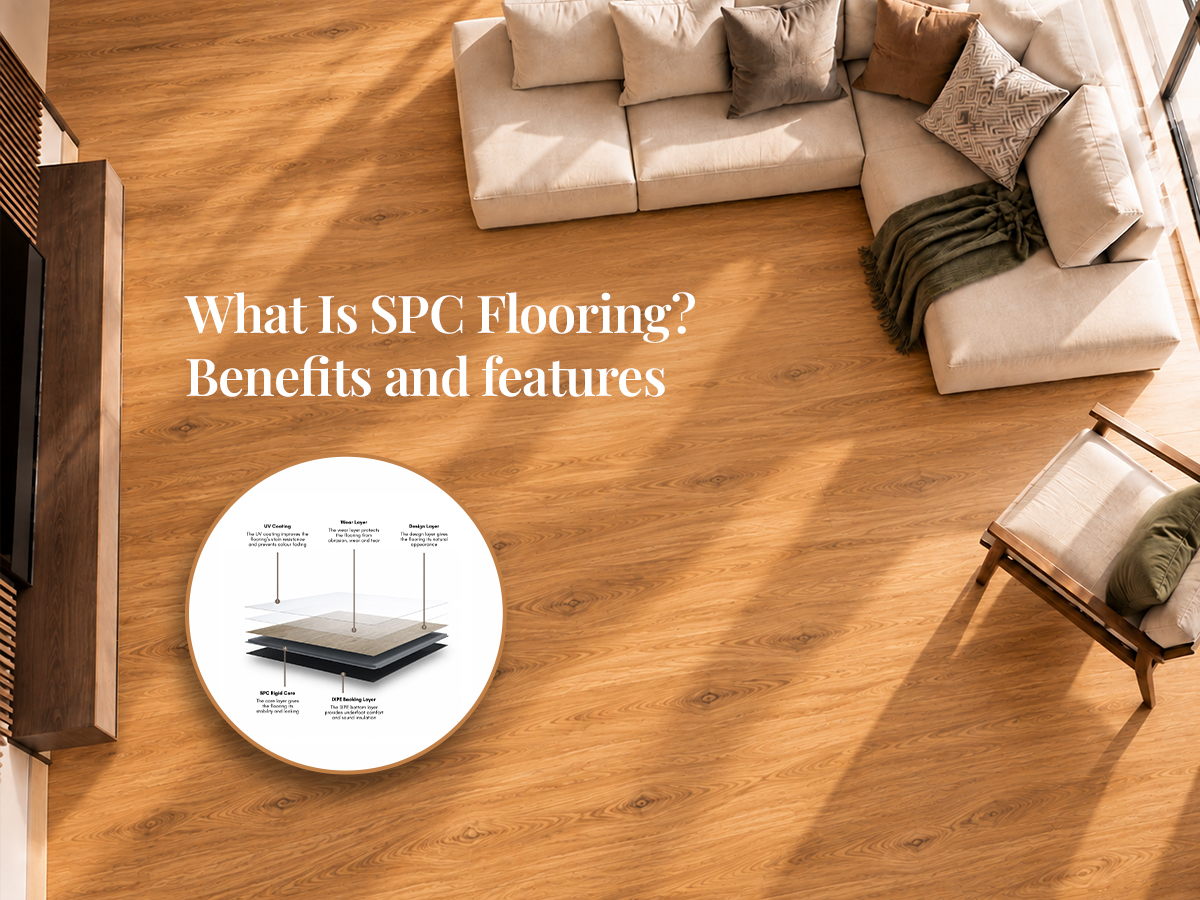
The construction of SPC flooring is one of the reasons behind its performance. Durell SPC Flooring consists of multiple functional layers, with each layer serving a specific purpose.
01UV CoatingThe UV coating helps improve the flooring's stain resistance and helps prevent colour fading, helping the surface maintain its appearance over time.
02Wear LayerThe wear layer protects the flooring from everyday abrasion, wear and tear, helping improve the durability of the visible surface during regular use.
03Design LayerThe design layer gives the flooring its natural appearance. It can reproduce the visual character of materials such as wood and stone, providing different aesthetic options for interior spaces.
04SPC Rigid CoreThe SPC rigid core forms the main structural layer of the flooring. It provides the flooring with stability and rigidity and contributes to the overall structure of the plank.
05IXPE Backing LayerThe IXPE backing layer forms the bottom layer of the flooring. It provides underfoot comfort and sound insulation, contributing to a more comfortable flooring experience.
The popularity of SPC flooring comes from its combination of durability, water resistance, design flexibility and practical installation. Here are some of the key benefits to consider.
One of the most notable characteristics of SPC flooring is its resistance to moisture. Durell's SPC flooring range is specified as Waterproof. This makes it a practical option for spaces where exposure to moisture needs to be considered.
However, waterproof flooring does not mean that every part of a flooring installation is automatically waterproof. Subfloor preparation, joints, edges and installation methods still matter.
The stone-polymer composite core gives SPC flooring a rigid structure. This helps the flooring maintain its shape under normal conditions and contributes to its overall stability. Durell's SPC products are described as dimensionally stable, with resistance to warping and swelling.
Flooring has to deal with everyday activity, from footsteps and furniture movement to accidental impacts. SPC flooring can incorporate a protective wear layer designed to improve resistance to scratches and impacts. Durell offers flooring with 0.3 mm and 0.5 mm wear-layer options, depending on the product.
When selecting a floor for a busy commercial space, it is important to consider the appropriate wear-layer specification rather than looking only at the appearance of the product.
Flooring has a major influence on the visual character of a room.
SPC flooring is available in a wide range of patterns and finishes, including wood-inspired and stone-inspired designs. Durell's current catalogue includes both wooden and stone finishes across its SPC flooring collection. This makes it easier to coordinate flooring with furniture, wall finishes, lighting and the overall interior theme.
Many SPC flooring systems use an Interlock mechanism. Durell specifically lists Interlock as a feature of its SPC flooring range. The system allows individual planks or panels to connect with one another without requiring adhesive across the entire floor surface.
However, installation requirements can vary, so the manufacturer's guidelines and the condition of the subfloor should always be considered.
Flooring that is simple to clean can be useful in both residential and commercial settings.
SPC flooring generally requires routine removal of dust and dirt followed by appropriate cleaning. Because the surface is designed as a protected finished layer, maintaining it does not require the same type of treatment associated with some natural flooring materials. Always follow the manufacturer's cleaning recommendations for the specific product.
One of the advantages of SPC flooring is its versatility across different interior environments.
In residential interiors, SPC flooring can be used in:
Wood-look SPC flooring can help introduce warmth into an interior, while stone-look options can create a more contemporary appearance.
Offices require flooring that can handle regular foot traffic while maintaining a professional appearance. SPC flooring can be used in:
The appropriate wear-layer specification should be selected based on expected traffic.
Hospitals, clinics and diagnostic centres require flooring that can handle regular foot traffic and frequent cleaning. SPC flooring can be used in reception areas, waiting rooms, corridors, consultation rooms and administrative spaces, offering a practical and visually appealing flooring option for suitable healthcare environments.
Hotels, cafés, restaurants and other hospitality environments can also use SPC flooring for selected interior applications, depending on the product specifications and project requirements.
Not all SPC flooring products are identical. If you are comparing different options, look beyond the pattern and check the technical specifications.
ThicknessSPC flooring is available in different thicknesses. Durell's current range includes 6 mm and 7 mm options across multiple products. Thickness is one factor to consider alongside the construction of the product, subfloor and installation system.
Wear LayerThe wear layer is important because it protects the decorative surface.
Durell's flooring range includes 0.3 mm and 0.5 mm wear-layer options, depending on the product. For spaces with heavier foot traffic, the appropriate wear-layer specification should be considered carefully.
Water ResistanceIf the flooring is being considered for kitchens, moisture-prone areas or other environments where spills are possible, check the manufacturer's stated water-resistance specifications.
Installation SystemInterlock systems can make installation more convenient, but the existing floor must still be appropriately prepared. A level, suitable subfloor is important for achieving a stable finished floor.
WarrantyA warranty provides useful information about the manufacturer's product coverage.
SPC flooring is one option among several flooring materials. The right choice depends on the requirements of the project.
Water resistance High Varies by material and finish Generally high Design options Wood, stone and other designs Primarily wood aesthetics Wide range Surface protection Wear layer Depends on finish Hard glazed surface Installation Often Interlock System Varies Adhesive and grout Maintenance Generally straightforward Requires product-specific care Generally easy, with grout maintenance Underfoot feel Rigid with flooring-system variation Depends on wood construction Hard surface Moisture considerations Waterproof Requires greater moisture consideration Generally suitable for wet areasThis comparison is not about identifying one universally suitable flooring material. Instead, it highlights the characteristics that should be considered based on the space, usage and project requirements.
SPC flooring can be considered for Indian homes where homeowners want a combination of contemporary aesthetics and practical surface performance. Its waterproof construction, rigid core and variety of finishes make it suitable for different interior styles. However, factors such as local climate, room conditions, subfloor quality, expected foot traffic and installation practices should be considered before making a final selection. For homes with children, pets or high daily activity, scratch and impact resistance may also be important considerations.
Durell offers a dedicated SPC Flooring collection designed for residential and commercial interiors. With wooden and stone-inspired options, while individual products are available in specifications such as 6 mm and 7 mm thickness and 0.3 mm and 0.5 mm wear layers.
Durell also highlights features including:
This combination gives architects, interior designers, homeowners and commercial project teams different options to match flooring performance with the requirements of their space.
SPC Flooring combines a rigid stone-polymer composite core with a decorative surface and protective wear layer, creating a flooring solution designed for modern interiors. Its key characteristics including water resistance, dimensional stability, scratch and impact resistance, design flexibility and Interlock System make it worth considering for a variety of residential and commercial applications. However, choosing flooring should always go beyond appearance. Thickness, wear layer, installation method, subfloor condition, expected traffic and warranty are all important factors to evaluate. With a broad range of finishes and product specifications, Durell provides SPC flooring options for different interior requirements, from wood-inspired residential floors to stone-inspired contemporary spaces.
Explore Durell's collection and find a finish that complements your space.
Explore SPC FlooringSPC stands for Stone Polymer Composite. The term refers to the rigid composite core used in this type of flooring.
Is SPC flooring waterproof?Yes, many SPC flooring products are designed to be waterproof. Durell's SPC flooring range is specified as 100% waterproof.
Is SPC flooring durable?SPC flooring is designed with a rigid composite core and protective wear layer. The actual durability depends on factors such as product construction, wear-layer thickness, installation and usage conditions.
Is SPC flooring suitable for bedrooms and living rooms?Yes. SPC flooring can be used in bedrooms, living rooms and other residential areas. Wood-inspired finishes can be used to create a warm, natural-looking interior.
Can SPC flooring be used in kitchens?Yes, it is suitable Durell SPC Flooring can handle the regular Spills. Its waterproof construction can be particularly useful where occasional spills occur.
How thick is SPC flooring?SPC flooring is available in different thicknesses. Durell's current collection includes 6 mm and 7 mm options across multiple products.
Does SPC flooring require adhesive?No, we use an Interlock system.